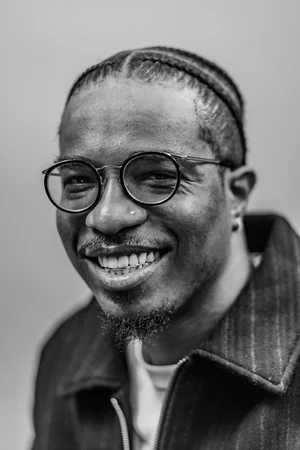
The Pistons Won. Again.
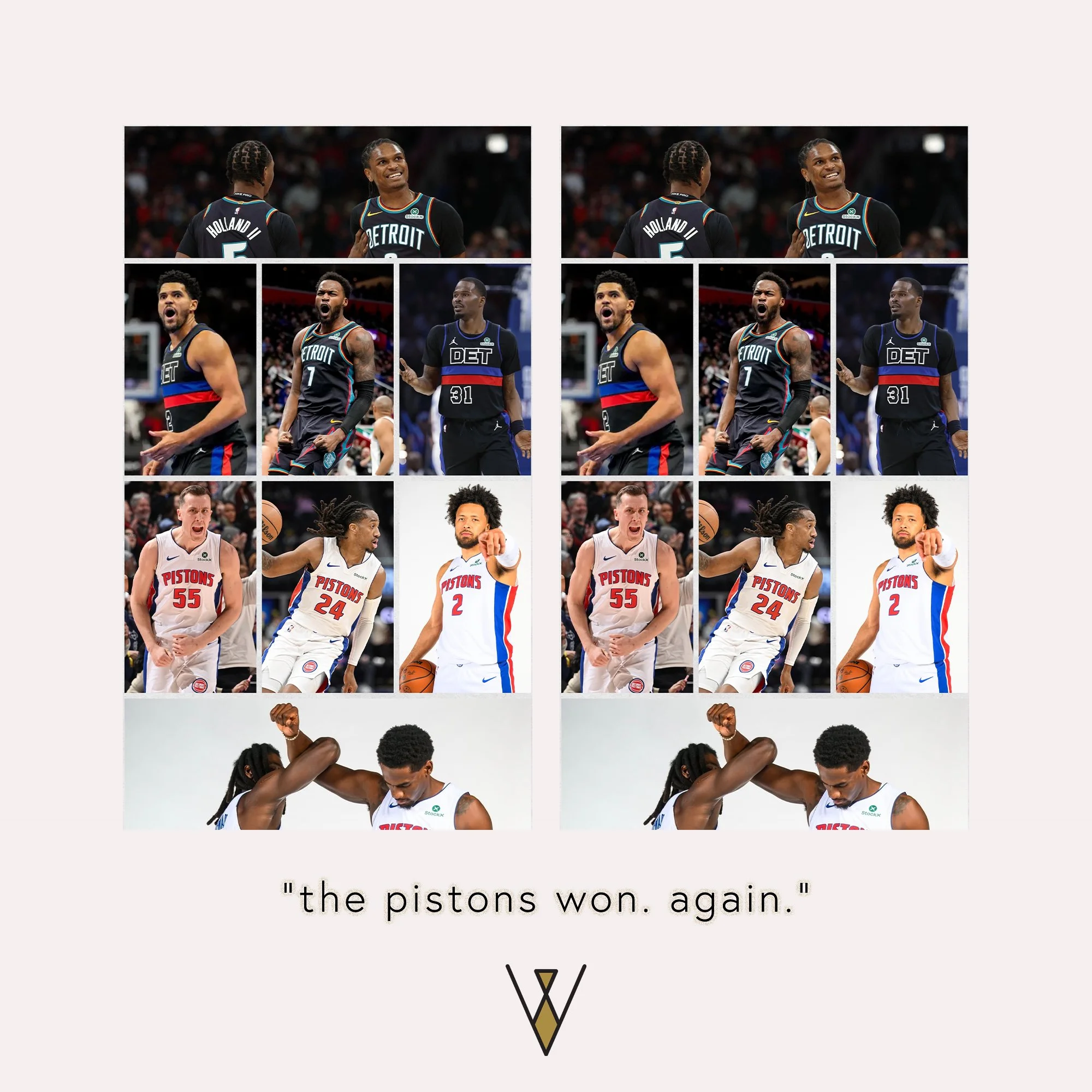
Twenty years after the greatest regular season in franchise history and 22 since their last world title, this generation’s Stones are back in their familiar role as league spoilers.
Hamidou Diallo.
That’s where we were as Pistons fans.
Bargaining.
Wondering if Hamidou Diallo could be a piece of the franchise’s future.
I promise I’m not saying that to be mean to dear Hami; this backhanded compliment should be sincerely regarded as more compliment than backhanded; I truly liked Hami.
But, come on.
Where is Hamidou Diallo right now? I’ll give you fifty guesses. I’ll give myself 100. We’ll both fail.
I have more names if you want them. You don’t, but here they are anyway:
Kentavious Caldwell-Pope. I wanted to supermax him. (To all the non-hoops heads reading this, which, if you’re here, I appreciate you, “supermax” means to pay him as much money as we could.)
Stanley Johnson. I wanted to draft Justice Winslow instead. At least we were both wrong…?
Luke Kennard. Keenan just texted me about that one. I was like, a little under half right, though. Let’s call it 47.7 percent.
Andre Drummond. Had incredible high school highlights. Led the league in rebounding!
Josh Smith? Ha, moving on.
Reggie Jackson? RT ha, moving on.
(I’m never interviewing any of these folks, am I?)
Wait, there were like 10 games where Brandon Jennings made me perk up. Then he tore his Achilles. Yup.
Sekou Doumbouya? Shut up, Larry. You’re right, I apologize.
Okay — I’m done depressing myself. I belabor the point to emphasize just how plainly insane you become when you become desperate for anything resembling a path out of basketball mediocrity.
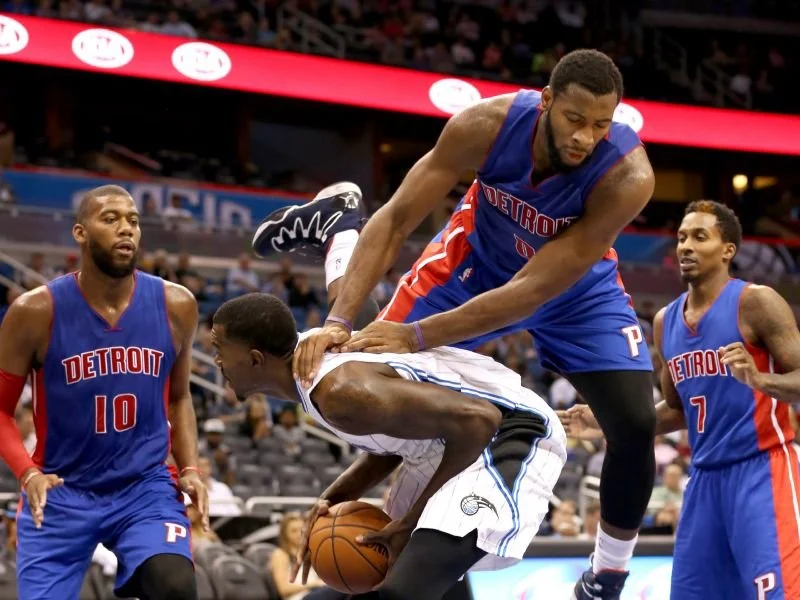
For a decade and change, the Pistons floundered in obscurity.
And make no bones about it, the Detroit Pistons have been varying levels of mediocre (meh, deplorable, historically awful, mediocre-plus, promising) since the fateful Chauncey Billups trade of November 2008. Excuse the hyperbole, but that was tantamount to the Dallas Mavericks trading away Luka Dončić for me. I’ve never forgiven Joe Dumars for that, no matter his rationale, and wholeheartedly believe that one move fast-tracked the franchise to insignificance.
For a decade and change, the Pistons floundered in obscurity — never good enough to matter, never both bad and lucky enough to land the type of transformative draft picks or free agent signings necessary to return us to glory. I mean, it was a foregone conclusion that another team — any team — except the Pistons would win the league’s draft lottery each May, and 2021’s was no exception.
Instead, for the first time in what seemed eternal, the basketball gods did Detroiters a solid. Miraculously, the Pistons won that year’s lottery, the number one draft pick, and a legitimate opportunity to redirect the downward trajectory of the franchise. To be clear, not every top pick pans out, and even a bulk who do lean more role player than team cornerstone. Still, the mere whiff of a chance to become relevant members of the Association once more was better than the alternative of whatever the hell we were doing.
Enter Cade Cunningham: a jumbo guard the likes of Anfernee and Luka — and, more essential to Pistons fans, a floor general in the mold of Isiah and Chauncey. While other top prospects that summer intrigued draftniks because of their volatility, Cade’s consistency and composure felt just as vital as his physical attributes to a team in need of an identity. As it became increasingly evident he’d be the Pistons’ preference, he openly embraced both the weight and the opportunity of the situation; once he donned the Cartiers during his draft night interview, you felt he genuinely wanted to be in Detroit for the long haul.
For what it’s worth, Cade’s arrival didn’t result in immediate prosperity, either. The team’s abysmal record cost him the 2022 Rookie of the Year award; lower leg injuries cost him much of his sophomore campaign; he spent his third season mired in the worst losing streak in NBA history, coached by a man who appeared to want to be literally anywhere else in the world if not for his biweekly direct deposits. Surrounded by immaturity or flat incompetence, Cade wasn’t exactly labeled a failure, but the national media began to verbalize concerns he couldn’t be the guy; that maybe he was better suited as the second- or even third-best player on a championship contender. Yet if you watched the games, you knew he was never the problem — Cade was battling forces beyond his control, or at least above his rank.
While the earliest portion of last season portended another year adrift, a mid-December trip out west sprang a well of optimism. (I recall a frenzied comeback win in Sacramento the eve after Christmas — punctuated by a Jaden Ivey (!) four-point play (!!) — that both announced the Pistons’ newfound verve and cost the ever-employable Mike Brown his Kings head coaching job.) Suddenly, the team that seemingly specialized in snatching defeat from the jaws of victory had tripled its win total from the previous year; earned a top-six seed in the 2025 NBA Playoffs; and came this close to upsetting the favored New York Knicks in their first-round matchup.
Equal parts euphoric and incredulous, Detroit sports fans spent the bulk of the winter into the spring asking the same two questions every couple of days:
The Pistons won? Again?
Pardon the tangent, but I’ve noticed over the years that people really do not like Detroit.
We are the world’s villains, in a very bizarre way. Like, people would rather forget we exist, but if they’re forced to talk about us, it’s in this begrudging, dismissive tone. We get negative to no national coverage, and when we do, it’s mostly folks delighting in some sort of schadenfreude. It’s a miracle that I was born in that city specifically, but I at least can bear witness to the apathy to write about it.
That apathy particularly manifests in sports conversations, where even the greatest Detroit teams are regarded more as a nuisance than worthy of universal reverence. To wit:
Despite winning consecutive championships in 1989 and 1990, the Bad Boys Pistons have been transmuted into a historical footnote, a mere bridge between the Boston Celtics/Los Angeles Lakers dominance of the ‘80s and the dynastic Chicago Bulls of the ‘90s.
22 years ago, I fumed as NBA TV pundits insisted the Goin’ to Work Pistons would be roadkill in the 2004 NBA Finals for a Lakers team on the verge of implosion.
I had the privilege of sitting on press row 20 years ago as the ‘05-‘06 Pistons cruised to a 64-win season, only for Chauncey Billups to finish a distant fifth in Most Valuable Player voting to a guy whose team didn’t reach the highs of those Pistons at any point during that era.
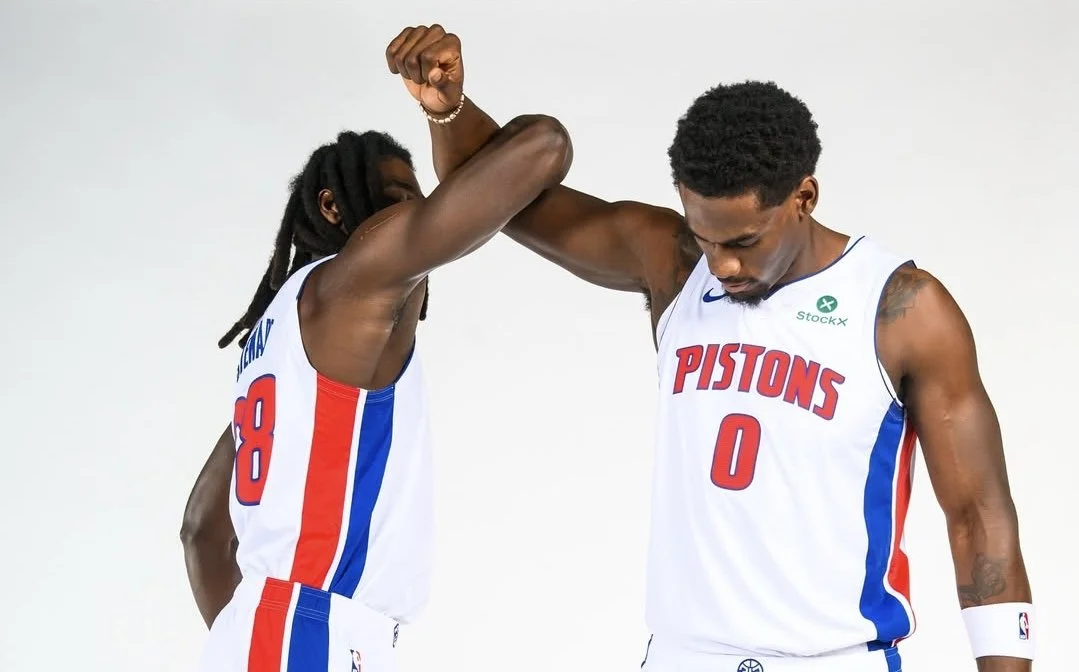
You can’t help but see Mahorn, Laimbeer, and the Wallaces in Jalen Duren and Isaiah Stewart — legitimately skilled bigs who will also beat your ass.
So, yes, I take umbrage at any insinuation that an exceptional Pistons team is a byproduct of circumstance, or slightly worse than their record indicates, or — worst of all — a fluke! In a season that the Eastern Conference earned a justified, if halfhearted, respect from the national media for being the West’s competitive peer, your Detroit Pistons led the conference for 157 consecutive days dating back to early November and won the thing with ease after racking up 60 victories against just 22 losses. You’d think less cynical minds would view that data as evidence of the East’s new normal instead of a flawed exception to the rule.
In defense of the disbelieving, I appreciate how jarring this all feels. This is the same franchise that lost 28 — twenty-fucking-eight — games straight, in a row, without interruption, only two seasons ago. Last season’s resurgence itself was a minor miracle, at minimum. Some of my favorite basketball minds said during preseason previews that a modest step forward — or even a modest step back! — should be seen as a success within the organization this year. Too young became too immature; scoring deficient became can’t win when it matters; Cade dependent became they can’t succeed without him.
Then, the games started, and it was like these Pistons conjured the best of those past title teams with their approach to each matchup. You can’t help but see Zeke and Chauncey in Cade, the unassuming ringleader whose competitive fire actually ignites the entire operation; Mahorn, Laimbeer, and the Wallaces in Jalen Duren and Isaiah Stewart — legitimately skilled bigs who will also beat your ass; fragments of Dennis Rodman and Vinnie Johnson and Lindsey Hunter and Mike James in the modern-day duo of Ausar Thompson and Ron Holland II, hustlers who make an immediate difference off sheer effort.
The symmetry across the eras is almost too good to be true, but there is something to be said about this generation’s success being rooted in the Pistons’ pre-existing heritage. In trying to modernize the franchise, they lost some of the toughness and tenacity — and to be frank, hostility — that made them three-time champs. The recent past has proven that the Detroit Pistons will not be able to replicate anybody’s success but their own. Fortunately, trying really hard, caring really deeply, and togetherness all the damn time happens to be a winning formula transcending both space and time.
The media’s season-long skepticism bled into postseason predictions, where the Pistons were cited as the opponent of choice for the quartet of teams vying to simply make the tournament. Overnight, an Orlando Magic team that was on the verge of future endeavoring its head coach (and maybe jettisoning its franchise player, too) was being bandied as a popular upset candidate, and Sunday’s Game 1 stinker — a Magic 112, Pistons 101 final score — only added to that discourse.
Then the Pistons responded with a resounding Game 2 victory that was met with a fraction the fanfare that accompanied the loss, especially in contrast with other top seeds who too suffered shocking early defeats. The juxtaposition — the double standard — is nearly enough to offend, until you remember our role in the larger firmament, established over nearly 80 years of history. We’re nobody’s favorite, but the league needs guys like the Detroit Pistons. Call us underdogs. Even call us villains.
But in another 15 victories, you just might be calling us the four-time world champions.
These days, it’s more a statement of fact. The Pistons won. Again!